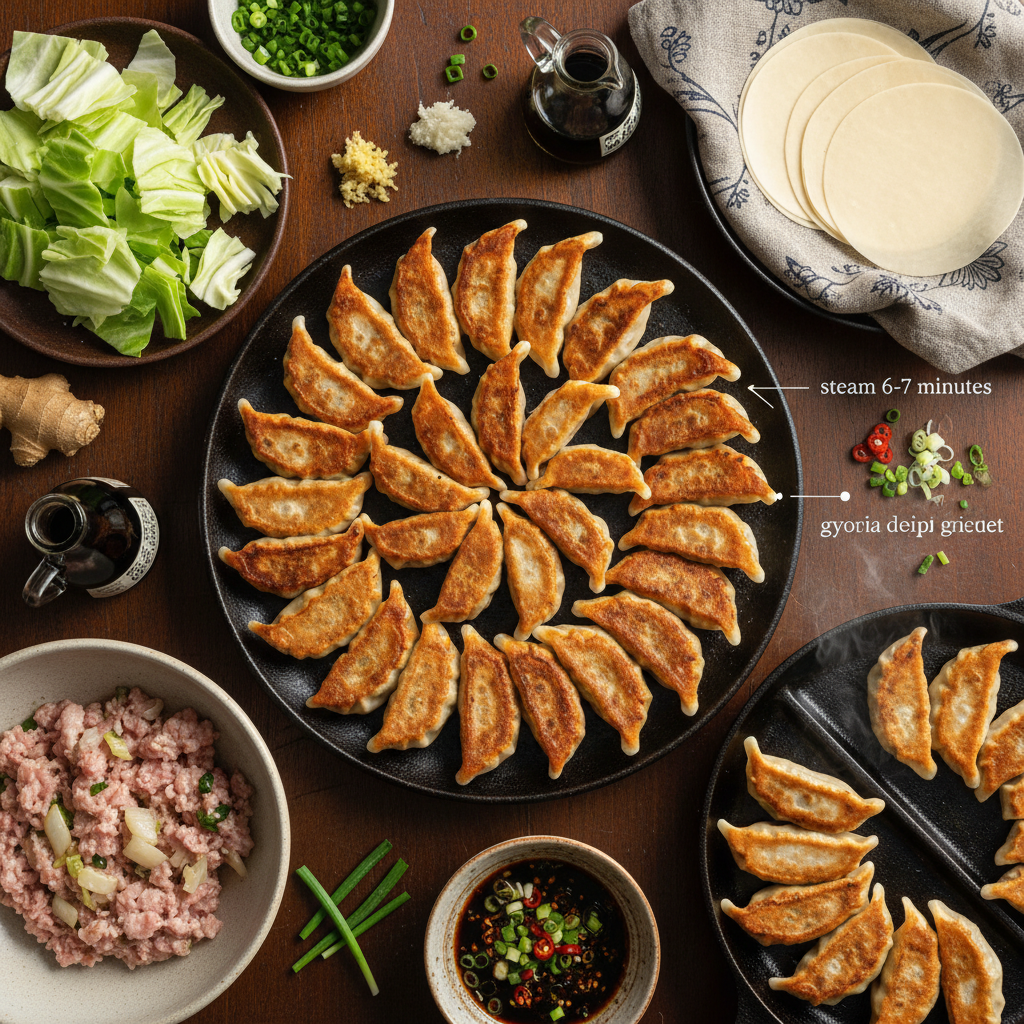
1. **Filling Preparation:** Finely chop cabbage, sprinkle with 1 tsp salt, let sit 10 minutes. Squeeze out all liquid thoroughly. [CRITICAL: Remove ALL moisture to prevent soggy filling] [PREP: Wrappers should be kept under damp cloth to prevent drying] 2. **Filling Mix:** Combine pork, cabbage, minced green onions, grated garlic/ginger, soy sauce, sesame oil. Mix vigorously in one direction for 3 minutes until sticky. 3. **Wrapping:** Place 1 tsp filling in center of wrapper. Wet edges with water, fold and pleat 5-6 times, pressing firmly to seal. [TECHNIQUE: Ensure no air pockets – press out air before final seal] 4. **Cooking:** Heat 1 tbsp oil in non-stick pan over medium-high (180°C/350°F). Place gyoza flat-side down, cook 2-3 minutes until golden brown. Add ½ cup water, cover immediately, steam 6-7 minutes at medium-low (160°C/320°F). Uncover, cook 1-2 minutes until bottoms re-crisp. [SERVE: With dipping sauce. STORE: Freeze uncooked on tray then bag. Cook frozen – add 2 minutes steam time.] Note:30 pieces
Cuisine: Japanese
-
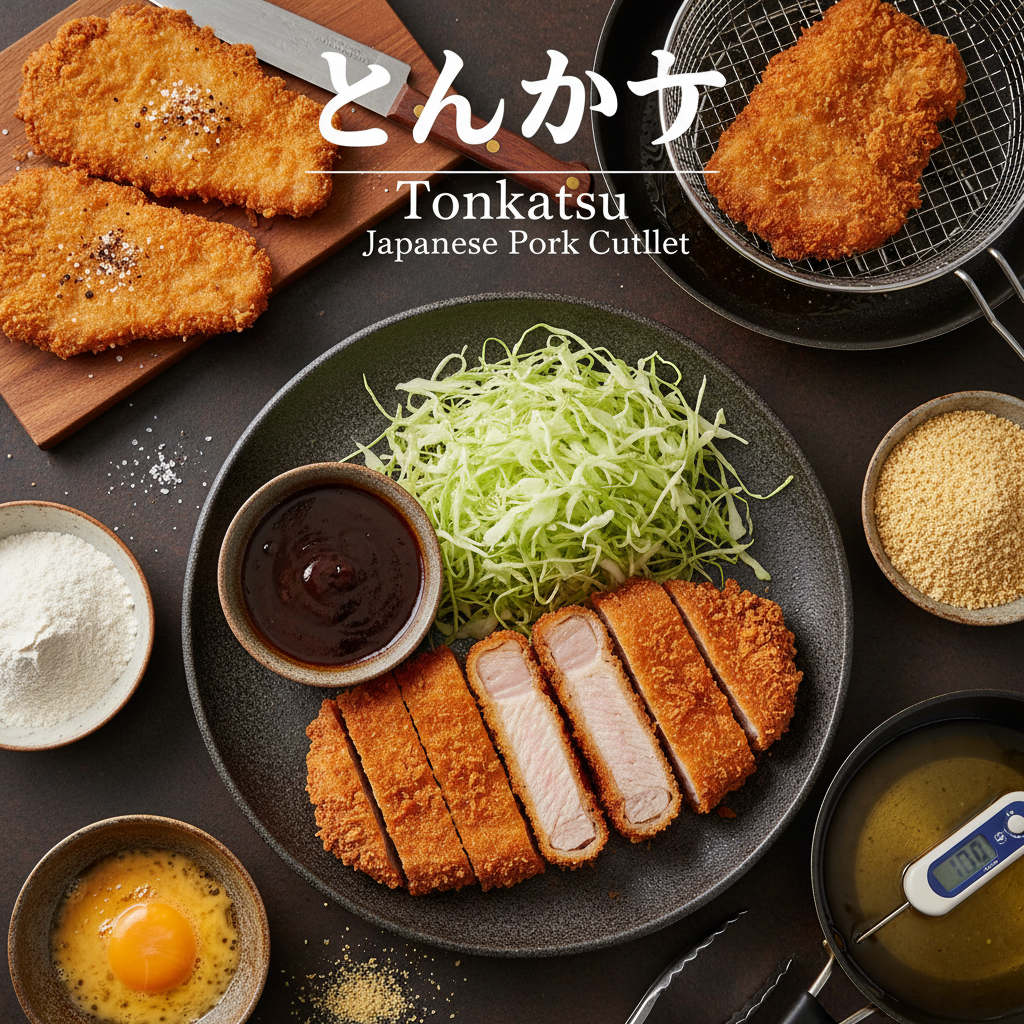
Tonkatsu (Japanese Pork Cutlet)
1. **Meat Preparation:** Pound pork to 1.5cm even thickness. Season both sides with salt/pepper. [PREP: Trim excess fat, make small cuts around edges to prevent curling] 2. **Breading Station:** Set up flour, beaten eggs, panko in separate dishes. Dredge pork in flour, shake off excess. Dip in egg, then press into panko firmly. [CRITICAL: Let breaded cutlets rest 5 minutes – helps coating adhere] 3. **Frying:** Heat oil to 170°C (340°F) in deep pan. Fry cutlets 5-6 minutes until golden brown, flipping once at 3 minutes. Internal temperature should reach 63°C/145°F. Drain on wire rack (not paper towels). [TECHNIQUE: Maintain oil temperature – use thermometer. Double-fry at 180°C/350°F for 30 seconds for extra crisp] 4. **Resting & Serving:** Rest 3 minutes before slicing. [SERVE: Slice against grain into 2cm strips. Accompany with shredded cabbage, tonkatsu sauce. STORE: Best fresh. Reheat in 180°C/350°F oven 8 minutes.]
-
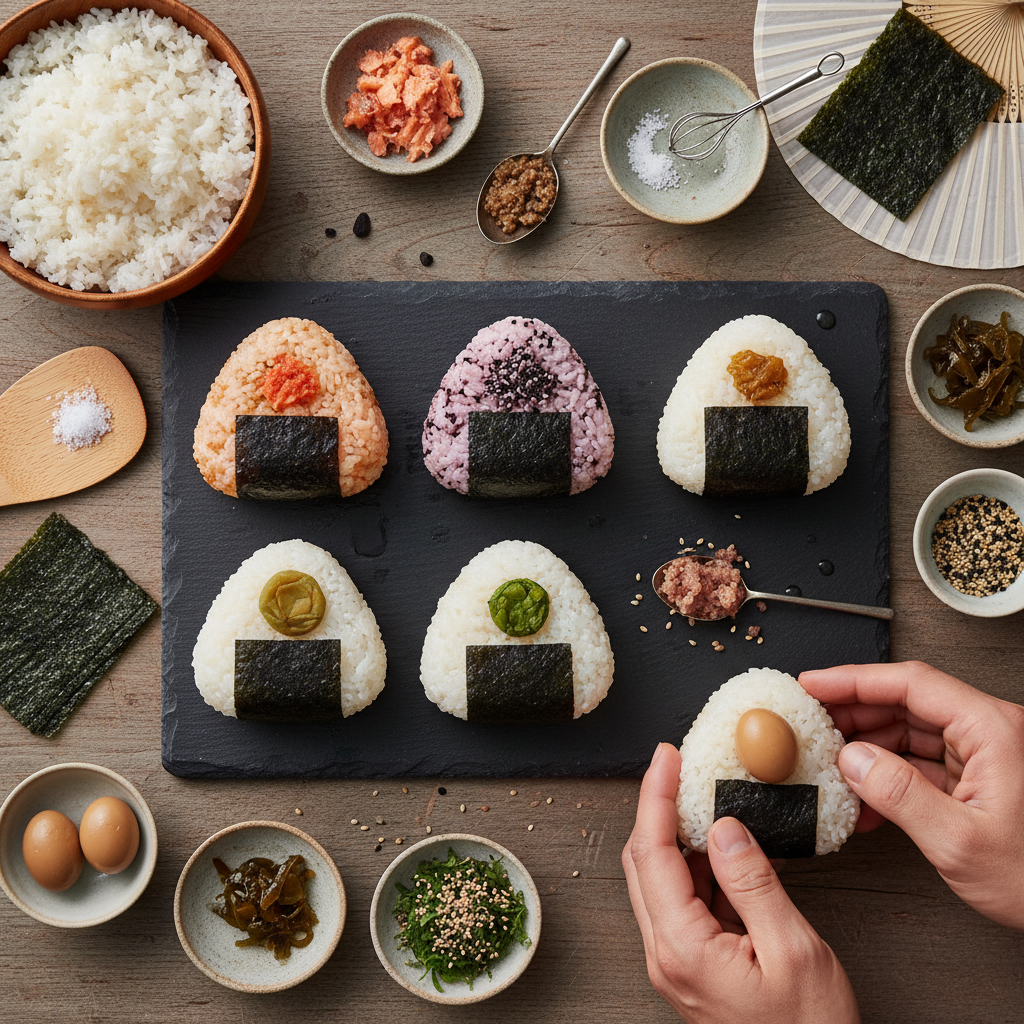
Onigiri (Japanese Rice Balls)
1. **Rice Cooking:** Wash rice until water runs clear. Soak 30 minutes. Cook with 2.5 cups water. Once boiled, reduce to lowest heat, cook covered 12 minutes. Turn off heat, steam 10 minutes. [CRITICAL: Do not lift lid during cooking/steaming] 2. **Seasoning:** Transfer rice to wooden bowl, sprinkle with 1 tsp salt dissolved in 1 tbsp water. Fold gently with rice paddle, fanning to cool to body temperature (37°C/98°F). [TECHNIQUE: Fanning creates glossy, non-mushy rice] 3. **Shaping:** Wet hands with salt water. Place ⅙ rice in palm, make indent, add 1 tsp filling. Cup hand, shape into triangle with gentle pressure. [CRITICAL: Don’t squeeze too hard – rice should hold but not be dense] 4. **Finishing:** Wrap with nori strip just before serving. [SERVE: Room temperature. STORE: Wrap individually in plastic, refrigerate 24 hours. Nori separate until serving to stay crisp.] Note: 6balls
-
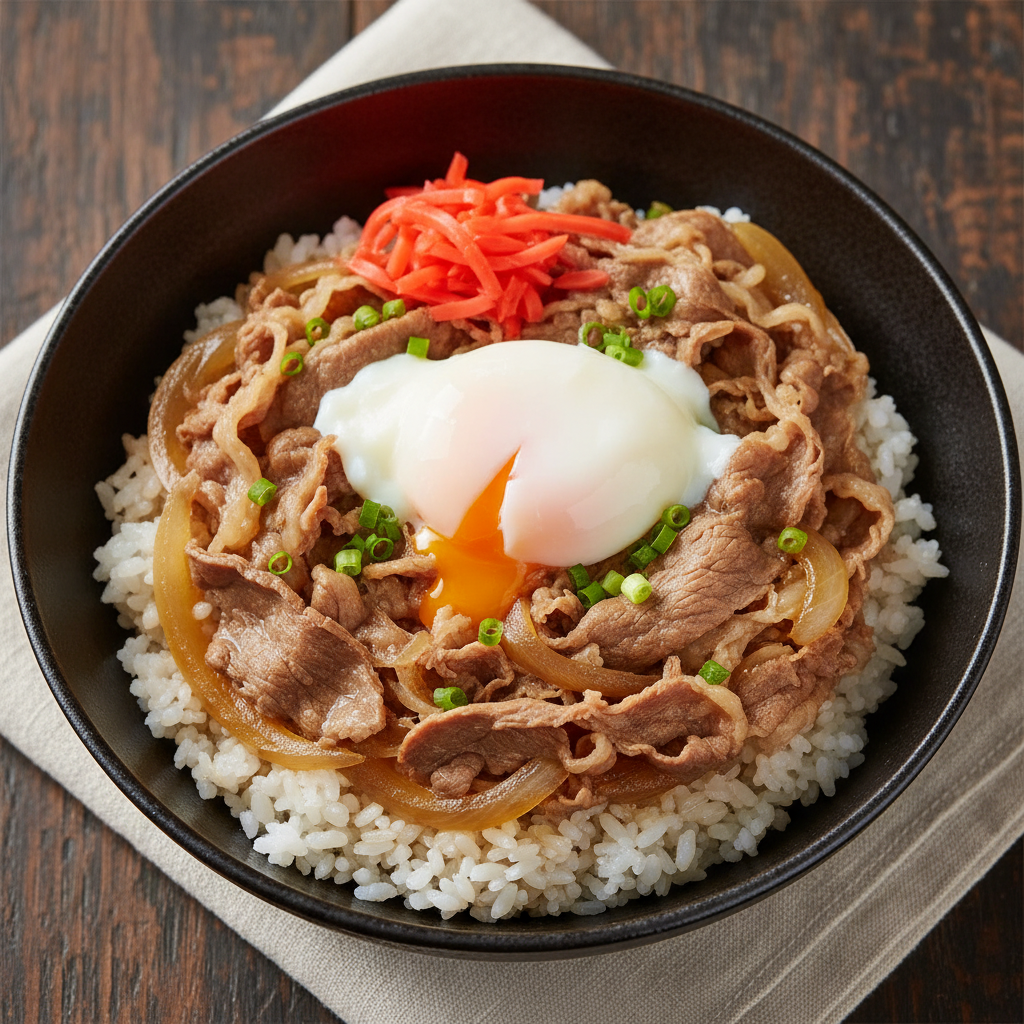
Gyudon (Beef Rice Bowl)
1. **Broth Preparation:** In pan, combine dashi, soy sauce, mirin, sugar, grated ginger. Bring to simmer over medium heat (85°C/185°F). Add thinly sliced onion, cook 3 minutes. [PREP: Slice onion 2mm thick, separate beef slices] 2. **Cooking Beef:** Add beef slices in single layer. Simmer 4-5 minutes at 82°C/180°F until beef is cooked through but still tender. [CRITICAL: Do not stir vigorously – gently push beef into broth to maintain slice integrity] 3. **Reducing:** Continue simmering 2-3 minutes until liquid reduces by ⅓. [TECHNIQUE: Skim any foam for clear broth] 4. **Assembly:** Divide hot rice into deep bowls. Arrange beef and onions over rice, spoon over remaining broth. [SERVE: Immediately topped with beni shoga and optional poached egg. STORE: Not recommended – beef becomes tough when reheated.]
-
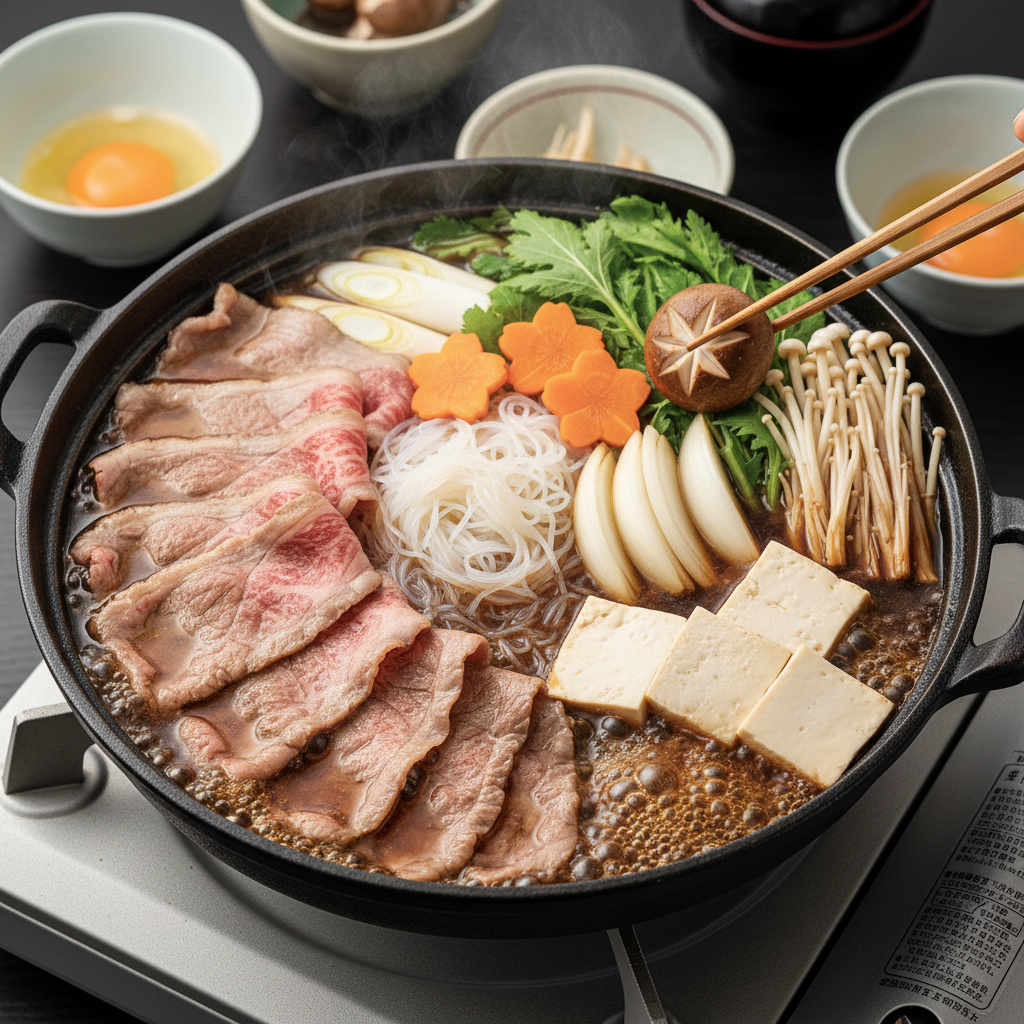
Sukiyaki
1. **Broth Preparation:** Combine ½ cup soy sauce, ¼ cup mirin, ¼ cup sake, 3 tbsp sugar in saucepan. Heat gently to 60°C (140°F) until sugar dissolves, do not boil. [CRITICAL: Never boil warishita – destroys delicate balance] [PREP: Cut tofu into 2cm cubes, carrot into flower shapes, onion 45° diagonal slices] 2. **Assembly in Pot:** Heat sukiyaki pan or heavy skillet to medium (150°C/300°F). Arrange beef slices in single layer, cook 30 seconds per side just until color changes. Push to side. [TECHNIQUE: Use chopsticks to arrange ingredients in neat sections] 3. **Adding Vegetables:** Arrange vegetables, tofu, shirataki in remaining space. Pour warishita sauce to cover bottom 1cm. Cover, simmer at 85°C/185°F for 10 minutes. [CRITICAL: Do not stir – ingredients should cook in their sections] 4. **Dipping & Serving:** Crack raw egg into each bowl, beat lightly. Diners dip cooked items into egg. [SERVE: At table over portable burner. STORE: Not recommended – consume immediately.]
-
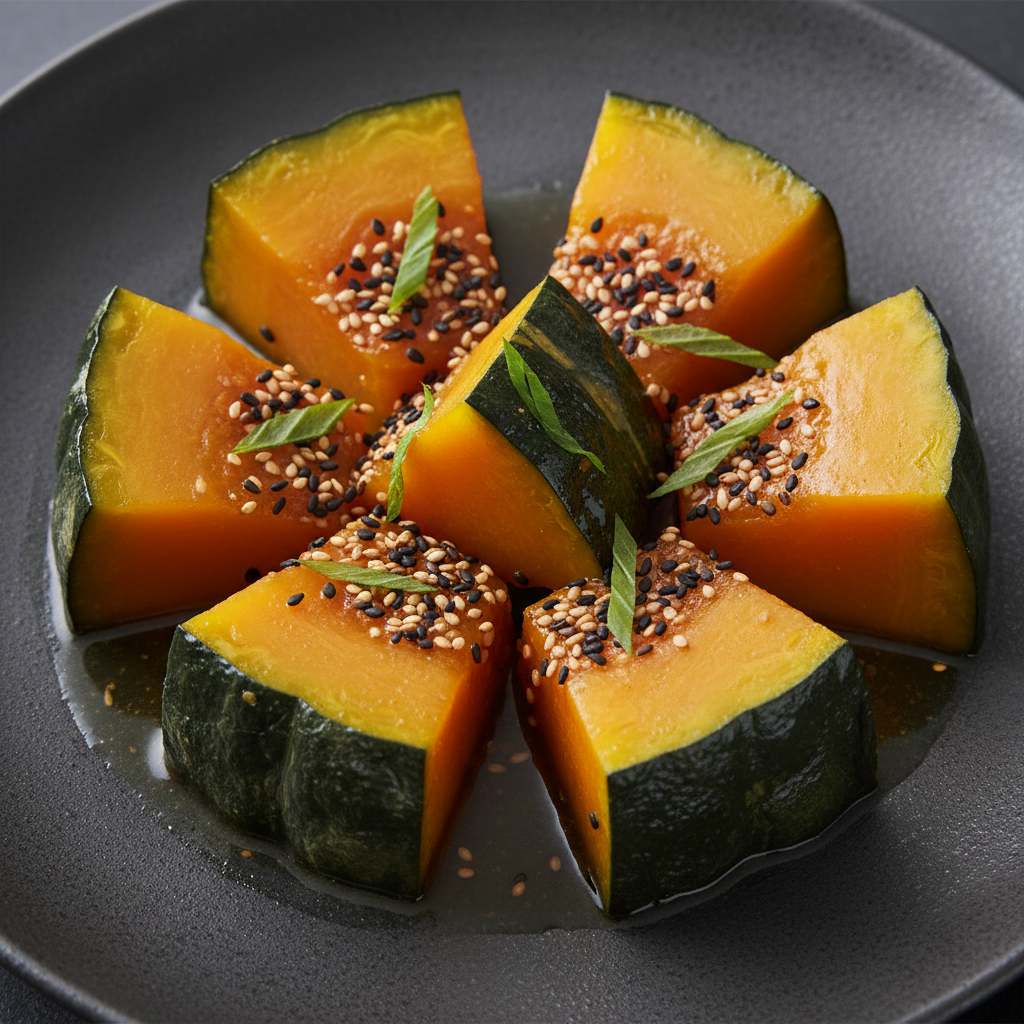
Simmered Kabocha
1. **Kabocha Preparation:** Cut kabocha into 3cm wedges, peel with vegetable peeler leaving small amount of skin for color. Soak in water 5 minutes. [PREP: Cut uniform sizes for even cooking – use ruler] 2. **Simmering Liquid:** Combine dashi, soy sauce, mirin, sugar, salt in pot just large enough to hold kabocha in single layer. Bring to 80°C (175°F). [CRITICAL: Taste liquid – should be slightly salty (adjust with salt)] 3. **Gentle Simmering:** Add kabocha skin-side down. Place drop-lid (otoshibuta) or parchment paper circle directly on surface. Simmer at 85°C/185°F for 12-15 minutes until fork-tender. [TECHNIQUE: Use drop-lid to ensure even flavor penetration without stirring] 4. **Finishing:** Remove lid, increase heat to medium (95°C/203°F) to reduce sauce 2-3 minutes until slightly syrupy. [SERVE: Room temperature or chilled. Sprinkle sesame seeds. STORE: Refrigerate 3 days in reduced sauce.]
-
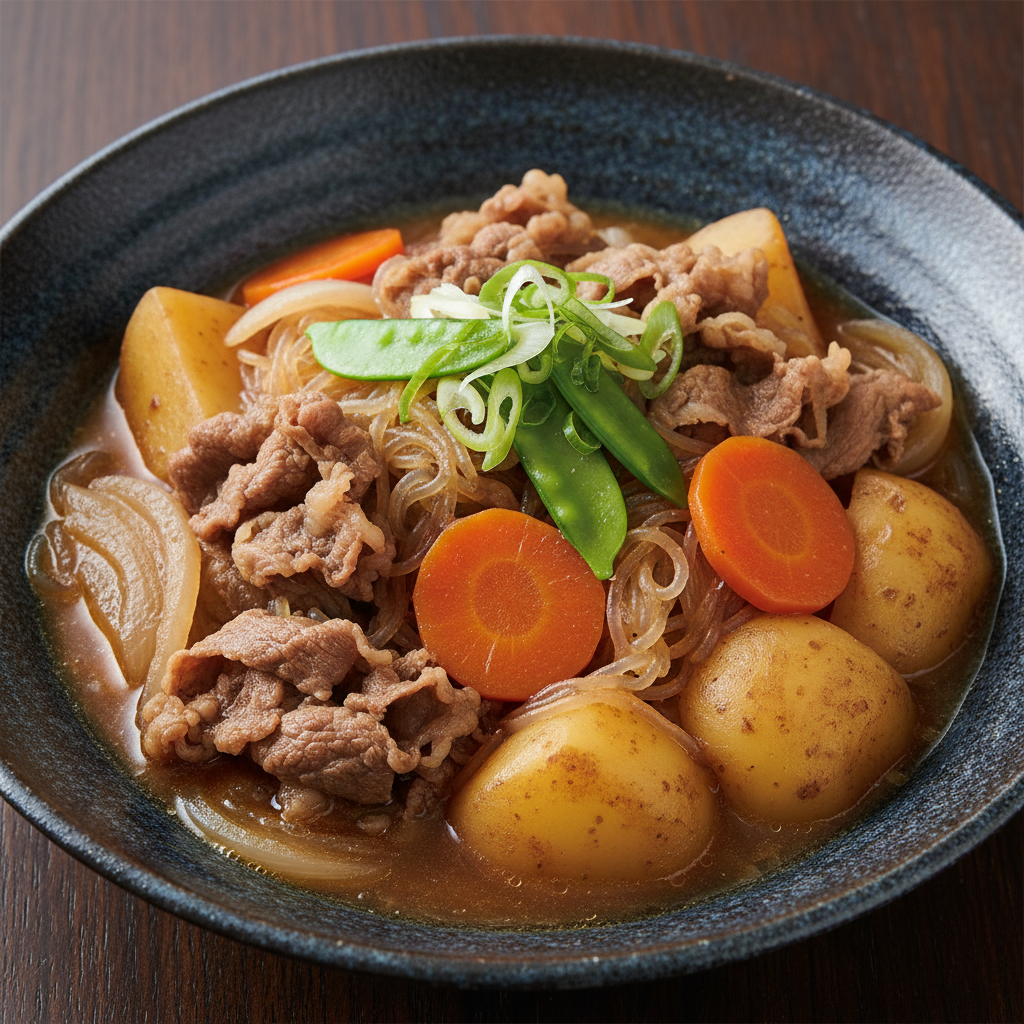
Nikujaga (Japanese Meat & Potatoes)
1. **Meat Preparation:** Heat oil in deep pot over medium-high (180°C/350°F). Brown meat 2-3 minutes until no longer pink. Remove and set aside. [PREP: Cut potatoes into 4cm chunks, carrots 2cm rounds, onion 8 wedges] 2. **Vegetable Sauté:** In same pot, add onions, cook 3 minutes until translucent. Add potatoes and carrots, cook 5 minutes stirring occasionally. [CRITICAL: Lightly brown vegetables for deeper flavor] 3. **Simmering:** Return meat to pot, add dashi, soy sauce, sugar, mirin, sake. Bring to boil, then reduce to low simmer (85°C/185°F). Add rinsed shirataki. Simmer covered 20 minutes. [TECHNIQUE: Skim foam every 5 minutes for clear broth] 4. **Reducing:** Remove lid, increase heat to medium (95°C/203°F). Cook 5-7 minutes until sauce reduces by half. [SERVE: Hot with rice. STORE: Tastes better next day – refrigerate 3 days. Reheat gently.]
-
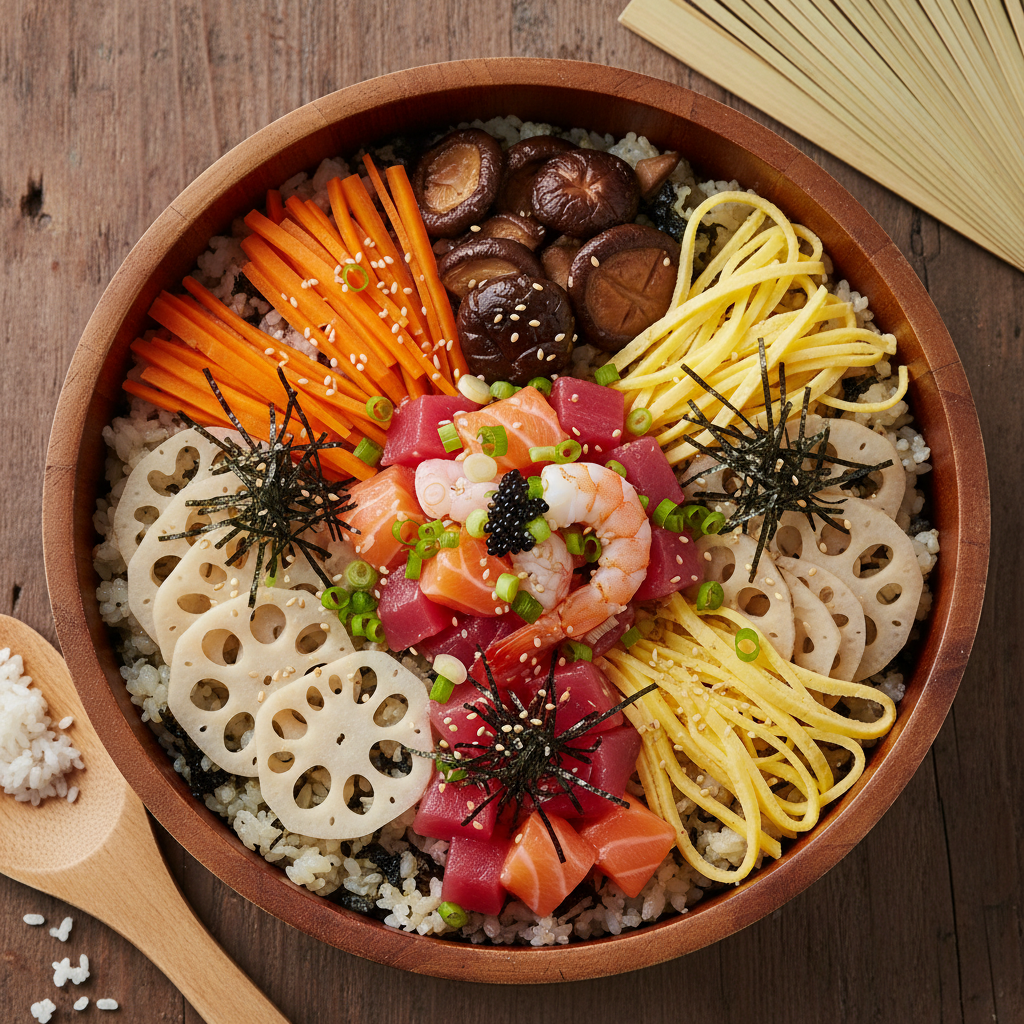
Chirashizushi (Scattered Sushi)
1. **Sushi Rice:** Wash rice until water clear, soak 30 minutes. Cook with water. Meanwhile, heat vinegar, sugar, salt to 40°C (104°F) until dissolved. Fold into hot rice while fanning to body temperature (37°C/98°F). [CRITICAL: Use wooden bowl and paddle, fan continuously while mixing] 2. **Toppings Preparation:** Thinly slice carrot, soak shiitake, lotus root. Cook each separately: carrot 2 minutes in boiling water, shiitake in 2 tbsp dashi/1 tbsp soy sauce/1 tsp sugar for 5 minutes, lotus root in vinegar water 3 minutes. [PREP: Cut all toppings into similar sizes for visual harmony] 3. **Thin Omelette:** Beat eggs with pinch sugar, strain. Cook in non-stick pan at low heat (120°C/250°F) in thin layers, roll, slice into thin strips. [TECHNIQUE: Maintain low heat for uniform yellow color without browning] 4. **Assembly:** Spread sushi rice in large dish. Arrange toppings in colorful sections. [SERVE: Room temperature. Garnish with nori. STORE: Consume within 4 hours. Do not refrigerate rice.]
-
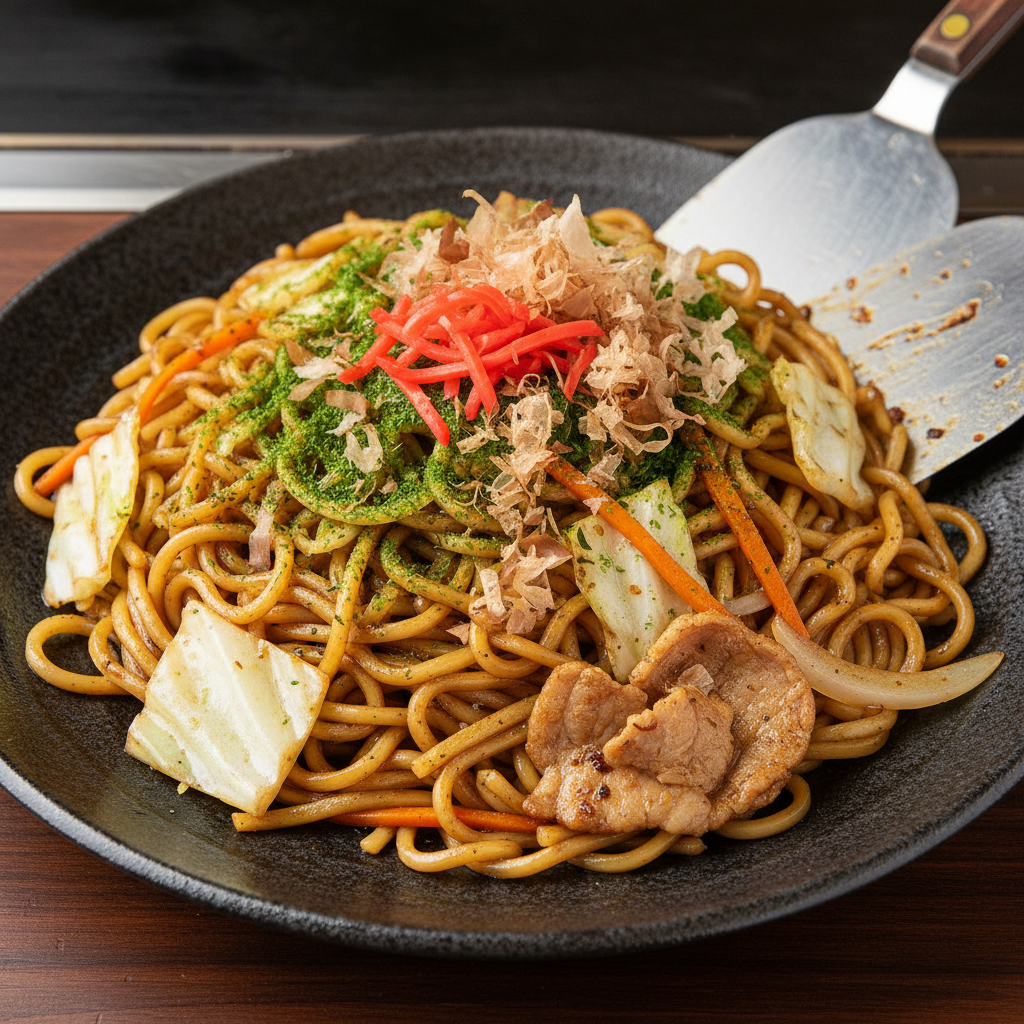
Yakisoba (Japanese Fried Noodles)
1. **Vegetable Prep:** Cut cabbage into 2cm squares, carrot julienne 3mm thick, onion sliced 5mm thick. Blanch carrots 1 minute in boiling water. [PREP: Use mandolin for uniform cuts, separate noodles before cooking] 2. **Meat Cooking:** Heat 1 tbsp oil in large pan or teppan to high (200°C/390°F). Add thinly sliced pork belly, cook 3-4 minutes until crisp. Remove. [CRITICAL: Work in batches to avoid steaming] 3. **Stir-frying:** In same pan, add remaining oil. Cook onions 2 minutes, add cabbage, cook 3 minutes until wilted but crisp. Add noodles, sprinkle with 2 tbsp water, cover 1 minute to steam. [TECHNIQUE: Use two spatulas for tossing, not stirring] 4. **Saucing & Finishing:** Return pork to pan, add sauce. Toss continuously over high heat (210°C/410°F) for 2 minutes until caramelized. [SERVE: Immediately topped with aonori, beni shoga, katsuobushi. STORE: Not recommended – noodles become soggy.]
-
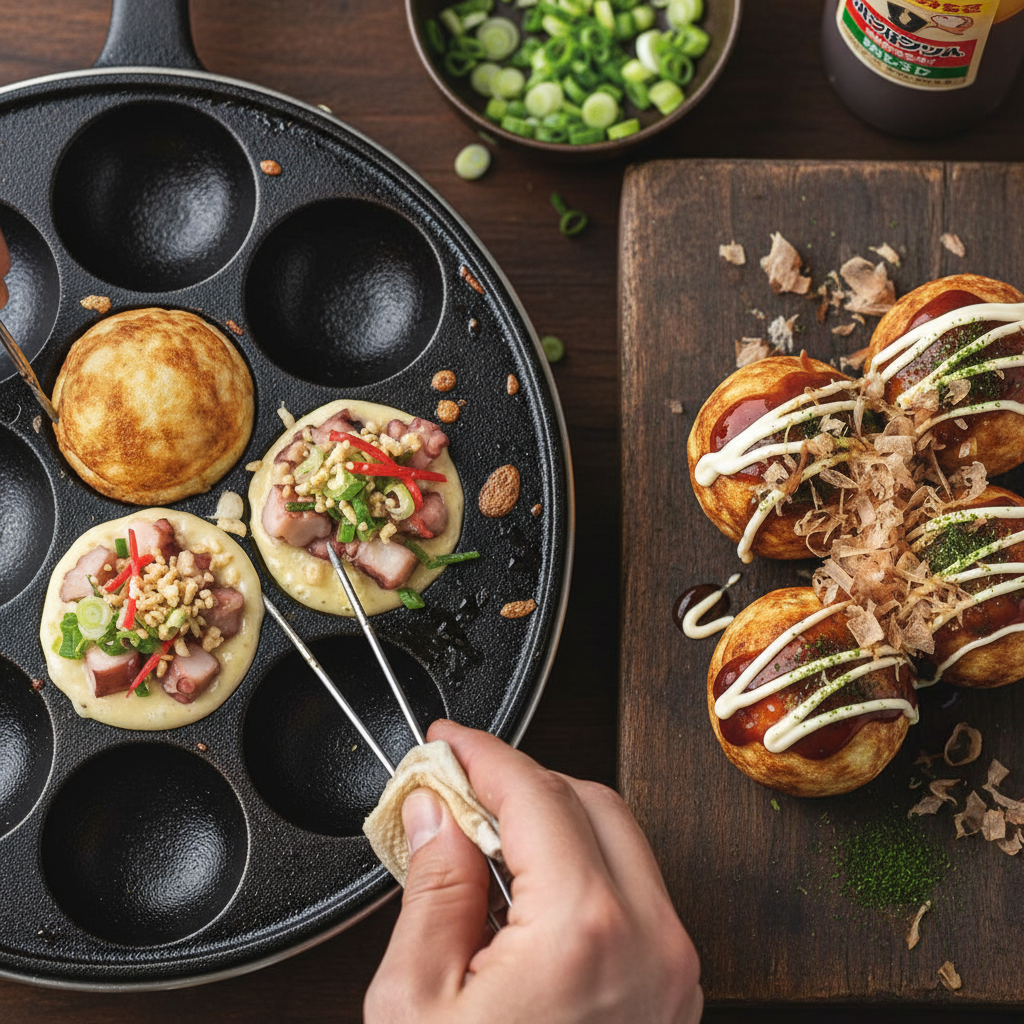
Takoyaki
1. **Batter Preparation:** In large bowl, combine takoyaki flour, dashi, and eggs. Whisk until smooth, let rest 15 minutes in refrigerator. [CRITICAL: Resting allows flour to hydrate – improves texture] [PREP: Cut octopus into 1.5cm cubes, finely chop green onions] 2. **Pan Heating:** Heat takoyaki pan over medium-high (180°C/350°F) until water droplets sizzle. Brush each depression generously with oil. [TECHNIQUE: Use paper towel soaked in oil to evenly coat] 3. **Filling & Turning:** Fill each hole 80% with batter. Add 1 octopus piece, some tenkasu, ginger, green onions to each. Cook 2 minutes until edges set. Use takoyaki picks to turn each ball 90°, add more batter to fill gaps. Continue turning every 1.5 minutes until spherical and golden brown (total 6-8 minutes). [CRITICAL: First turn at exactly 2 minutes – too early breaks structure] 4. **Serving:** Remove from pan, brush with takoyaki sauce, drizzle Japanese mayo, sprinkle katsuobushi and aonori. [SERVE: Immediately while hot and crispy outside, creamy inside. STORE: Not recommended – best fresh.]Note: 4 Balls