Meal Type: Dinner

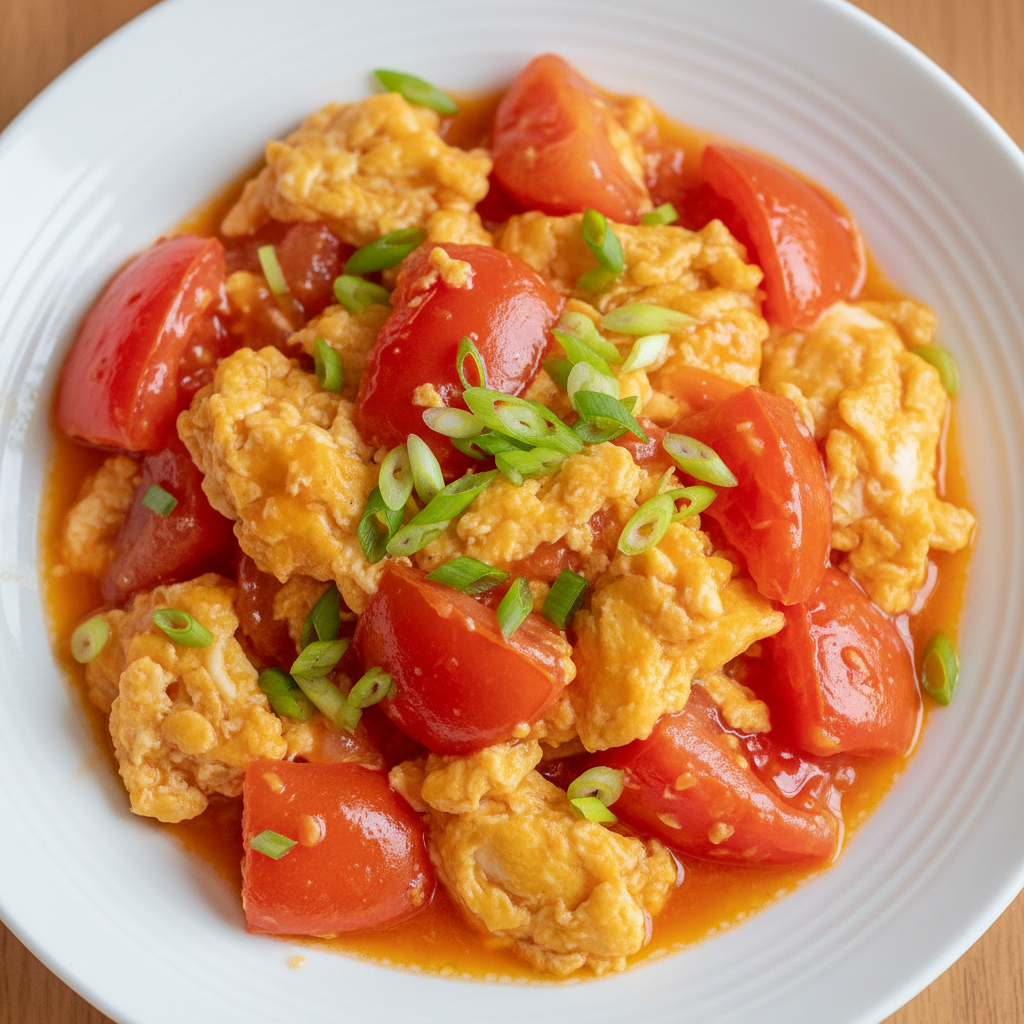
  • Tomato Egg Stir-fry

    Tomato Egg Stir-fry

    Step 1 (Prep Tomatoes): Score bottom of each tomato with an “X.” Blanch in boiling water for 45-60 seconds until skin peels. Immediately transfer to ice bath for 1 minute. Peel, remove core, and cut into 1-inch wedges (this prevents watery sauce).

    Step 2 (Scramble Eggs): Beat 4 eggs with a pinch of salt until yolks and whites are fully incorporated (about 30 strokes). Heat 1 tbsp oil in wok over medium-high until shimmering. Pour in eggs. Let set for 10 seconds, then push cooked edges toward center, tilting wok to let uncooked egg flow. Cook for 90 seconds until just set but still slightly runny on top (eggs will finish cooking later). Remove immediately.

    Step 3 (Cook Tomatoes): In same wok, add remaining 1 tbsp oil. Add minced garlic and stir-fry for 30 seconds until fragrant. Add tomato wedges, 1 tsp sugar (balances acidity), 1/2 tsp salt, 1/4 tsp white pepper, and optional 1 tbsp ketchup. Stir-fry for 2 minutes until tomatoes soften.

    Step 4 (Create Sauce: Add 2 tbsp water to wok. Cover and simmer over medium-low heat for 3-4 minutes until tomatoes break down into a chunky sauce. Use spatula to gently press some tomatoes to release juices.

    Step 5 (Combine Eggs: Return eggs to wok. Gently fold into tomatoes without breaking eggs into small pieces, allowing them to absorb sauce. Cook for 1 minute until eggs are fully set but still tender.

    Step 6 (Finish): Stir in chopped green onions. Taste and adjust seasoning.

    Step 7 (Serve & Store): Serve immediately with steamed rice or noodles. Best consumed fresh. Leftovers can be refrigerated for 1 day but texture will soften. Reheat gently in microwave at 50% power for 60-90 seconds. Not suitable for freezing.
  • Okonomiyaki

    1. **Batter Preparation:** Mix flour, dashi, eggs until just combined (lumps okay). Grate 100g yamaimo if using, fold in. [CRITICAL: Do not overmix – gluten development makes chewy] [PREP: Cut cabbage into 3mm shreds, chop green onions] 2. **Combining:** Fold cabbage, green onions, tenkasu into batter until evenly distributed. Let rest 10 minutes. [TECHNIQUE: Cabbage should be 3 times volume of batter – creates airy texture] 3. **Cooking:** Heat griddle or large pan to medium (160°C/320°F). Pour half batter, shape into 2cm thick round. Arrange 3-4 pork belly slices on top. Cover, cook 6 minutes. Flip using two spatulas, cover, cook 5 minutes. [CRITICAL: Covering creates steam that cooks cabbage through] 4. **Finishing:** Flip again, brush with okonomiyaki sauce. Cook 1 minute to caramelize. [SERVE: Drizzle mayo in zigzag, sprinkle katsuobushi and aonori. STORE: Reheat in 180°C/350°F oven for 8 minutes.]

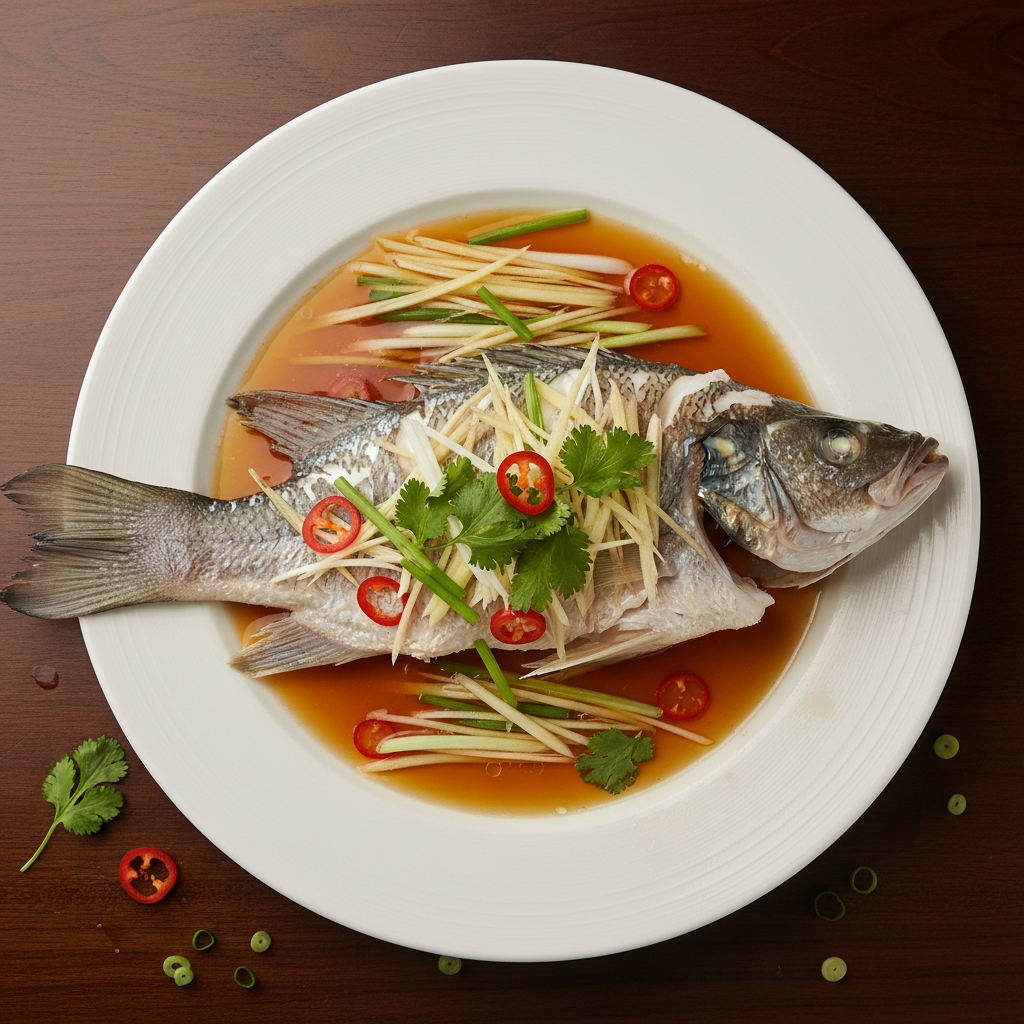
  • Steamed Whole Fish

    Steamed Whole Fish

    Step 1 (Prepare Fish: Rinse fish under cold water and pat completely dry with paper towels (critical for even steaming). Make 3-4 diagonal slashes about 1/2-inch deep on each side (helps even cooking). Rub inside and out with 1/2 tsp salt and 1/4 tsp white pepper.

    Step 2 (Set Up Steamer: Fill wok or steamer with water and bring to rolling boil. Place fish on a heatproof plate that fits inside steamer. Under fish, place 2-3 slices of ginger and 2-inch green onion pieces to elevate (allows steam to circulate underneath). On top of fish, scatter half of julienned ginger.

    Step 3 (Steam: Once water is boiling vigorously, place plate in steamer. Cover tightly. Steam over high heat for exactly 8-10 minutes (for 500g fish; add 2 minutes per 100g extra). DO NOT PEEK during first 5 minutes. Fish is done when flesh at thickest part flakes easily and internal temperature reaches 63°C (145°F).

    Step 4 (Drain & Garnish: Carefully remove plate from steamer. Pour off all accumulated liquid (this liquid can be fishy). Discard ginger and green onions from top. Scatter fresh julienned ginger and green onions over fish.

    Step 5 (Heat Oil & Sauce: In small saucepan, heat 2 tbsp oil over high until shimmering (about 180°C/350°F). Simultaneously, heat 3 tbsp soy sauce and 1 tbsp Shaoxing wine in another small pot until just warm (do not boil).

    Step 6 (Finish: Pour warm soy mixture around fish (not directly over top to preserve garnishes). Immediately pour the hot oil over the julienned ginger and green onions on top of fish – it should sizzle dramatically (this step unlocks aromas and slightly cooks garnishes).

    Step 7 (Serve & Store: Serve immediately with steamed rice. Consume same day for best quality. Leftovers can be refrigerated for 1 day; reheat by steaming for 3-4 minutes until warmed through. Do not microwave as it will toughen the fish.

  • Shogayaki (Ginger Pork)

    1. **Marinade Preparation:** Combine soy sauce, mirin, sake, sugar, grated ginger (with juice). Stir until sugar dissolves. [PREP: Thinly slice pork if not pre-sliced, slice onion 3mm thick] 2. **Quick Marinating:** Place pork in marinade, toss to coat, let sit 5 minutes at room temperature. [CRITICAL: Do not marinate longer than 10 minutes – ginger enzymes break down meat] 3. **Cooking:** Heat 1 tbsp oil in large pan over high (200°C/390°F). Drain pork (reserve marinade). Cook pork in single layer 1.5 minutes per side until browned. Remove. [TECHNIQUE: Work in batches – do not overcrowd] 4. **Saucing:** Reduce heat to medium (160°C/320°F). Add onion, cook 3 minutes until soft. Add reserved marinade, bring to simmer (90°C/194°F) for 2 minutes. Return pork, toss 30 seconds to glaze. [SERVE: Over rice with shredded cabbage. STORE: Refrigerate 2 days. Reheat gently.]

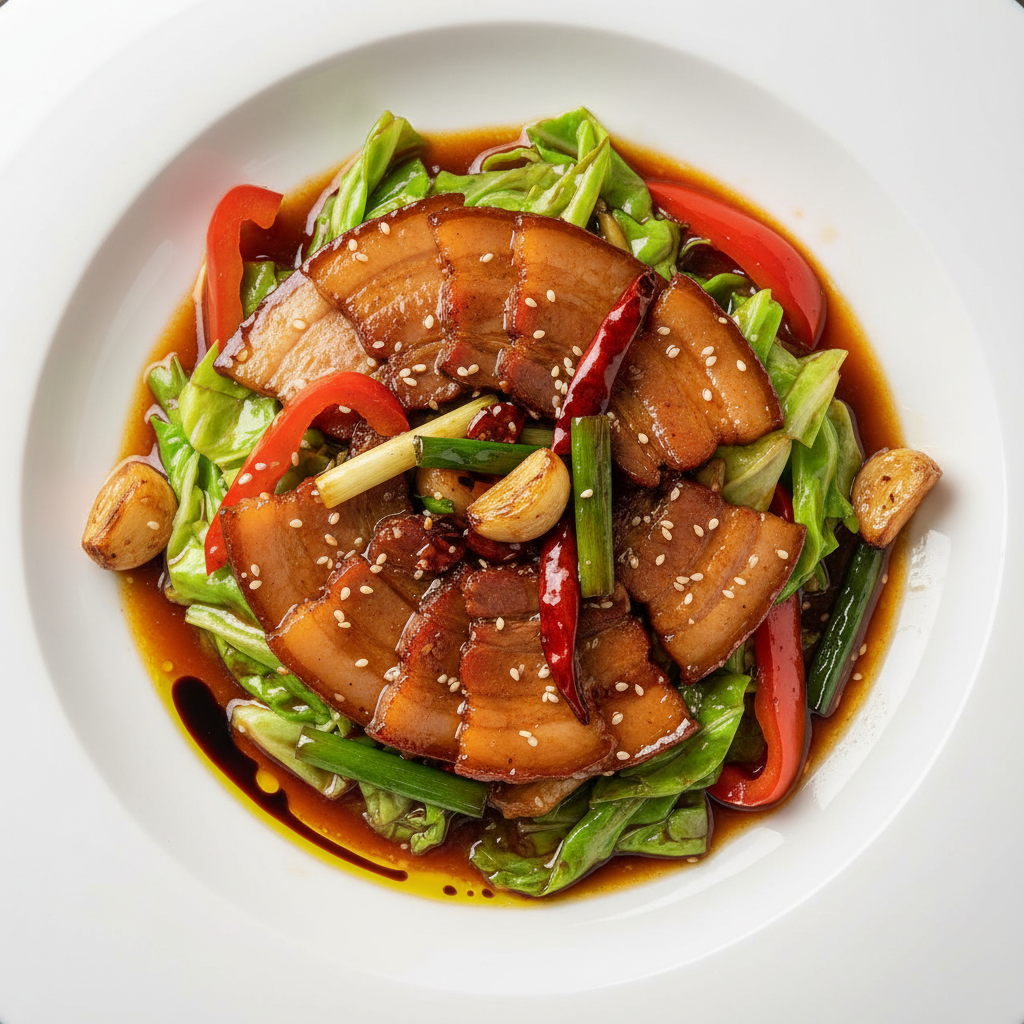
  • Twice-Cooked Pork

    Twice-Cooked Pork

    Step 1 (Boil Pork: Place 400g pork belly in pot, cover with cold water. Add 2 slices ginger and 1 green onion piece. Bring to boil, then reduce to simmer. Skim foam. Simmer covered for 25 minutes until pork is cooked through but still firm (internal temperature 75°C/167°F). Remove, rinse under cold water, and chill in refrigerator for 15 minutes until firm enough to slice (critical for thin slicing).

    Step 2 (Slice & Prep: Cut chilled pork belly into paper-thin slices (2mm thick) against the grain. Have all other ingredients prepped and ready (sliced garlic, ginger, leeks).

    Step 3 (Stir-fry Pork: Heat wok over medium-high until hot. Add 1 tbsp oil. Add pork slices and stir-fry for 4-5 minutes until they curl and become slightly translucent (rendering fat is key). Push pork to sides.

    Step 4 (Build Flavor: In center, add 1.5 tbsp Doubanjiang. Stir-fry for 60 seconds until oil turns red and fragrant. Add 1 tsp sweet bean sauce, sliced garlic, ginger, and optional dried chilies. Stir-fry for 30 seconds to combine with pork.

    Step 5 (Add Vegetables: Add leeks and remaining green onions. Increase heat to high. Stir-fry for 2-3 minutes until leeks wilt but still have crunch.

    Step 6 (Season: Add 1 tbsp soy sauce and 1/2 tsp sugar around the rim of wok. Toss everything together for 60 seconds until well combined and sauce coats ingredients.

    Step 7 (Serve & Store: Serve immediately with plenty of steamed rice to balance the richness. Leftovers can be refrigerated for 3 days. Reheat in wok over medium heat; the flavor actually improves overnight. Freeze for up to 1 month.

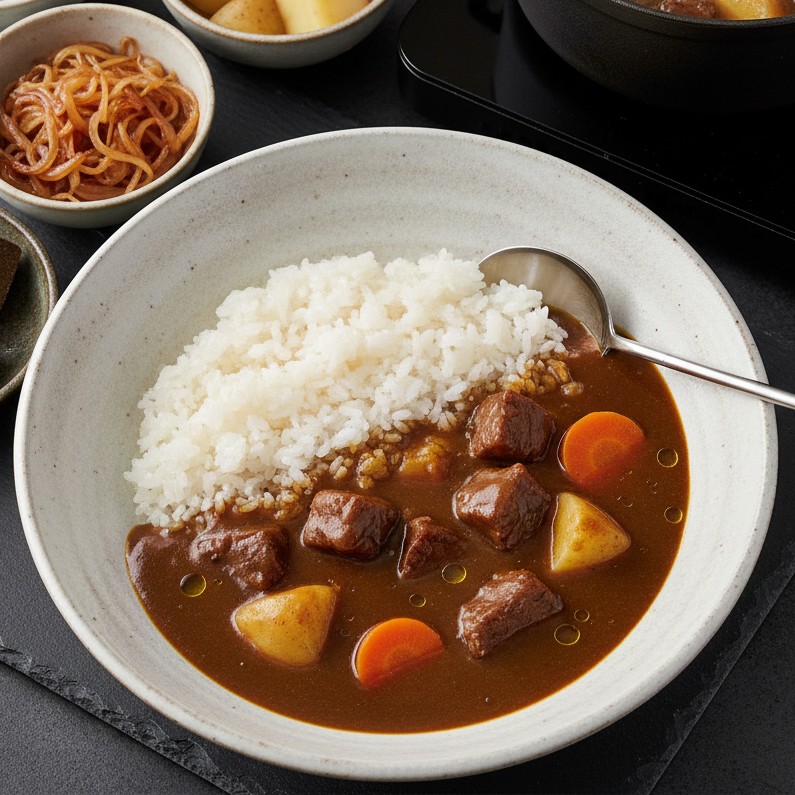
  • Japanese Curry Rice

    Japanese Curry Rice

    1. **Sautéing:** Heat 1 tbsp oil in large pot over medium-high (180°C/350°F). Brown beef cubes 3-4 minutes until caramelized. Remove and set aside. [CRITICAL: Don’t overcrowd pot – brown in batches] [PREP: Cut beef into 2cm cubes, carrots 1.5cm rounds, potatoes 3cm chunks] 2. **Aromatics:** In same pot, add 1 tbsp oil and cook thinly sliced onions over medium-low (150°C/300°F) for 15 minutes until golden brown. [CRITICAL: Stir every 2 minutes to prevent burning – caramelization is key for depth] 3. **Simmering:** Return beef to pot, add carrots/potatoes, pour 800ml water. Bring to boil then reduce to low simmer (85°C/185°F) for 25 minutes until vegetables are tender. Skim foam every 10 minutes. 4. **Finishing:** Turn off heat, break curry roux into pieces, stir until completely dissolved. Return to very low heat (65°C/150°F) for 5 minutes until thickened. [CRITICAL: Never boil after adding roux – causes separation] [SERVE: Over hot rice. STORE: Refrigerate 3 days or freeze 1 month. Reheat gently with splash of water.]

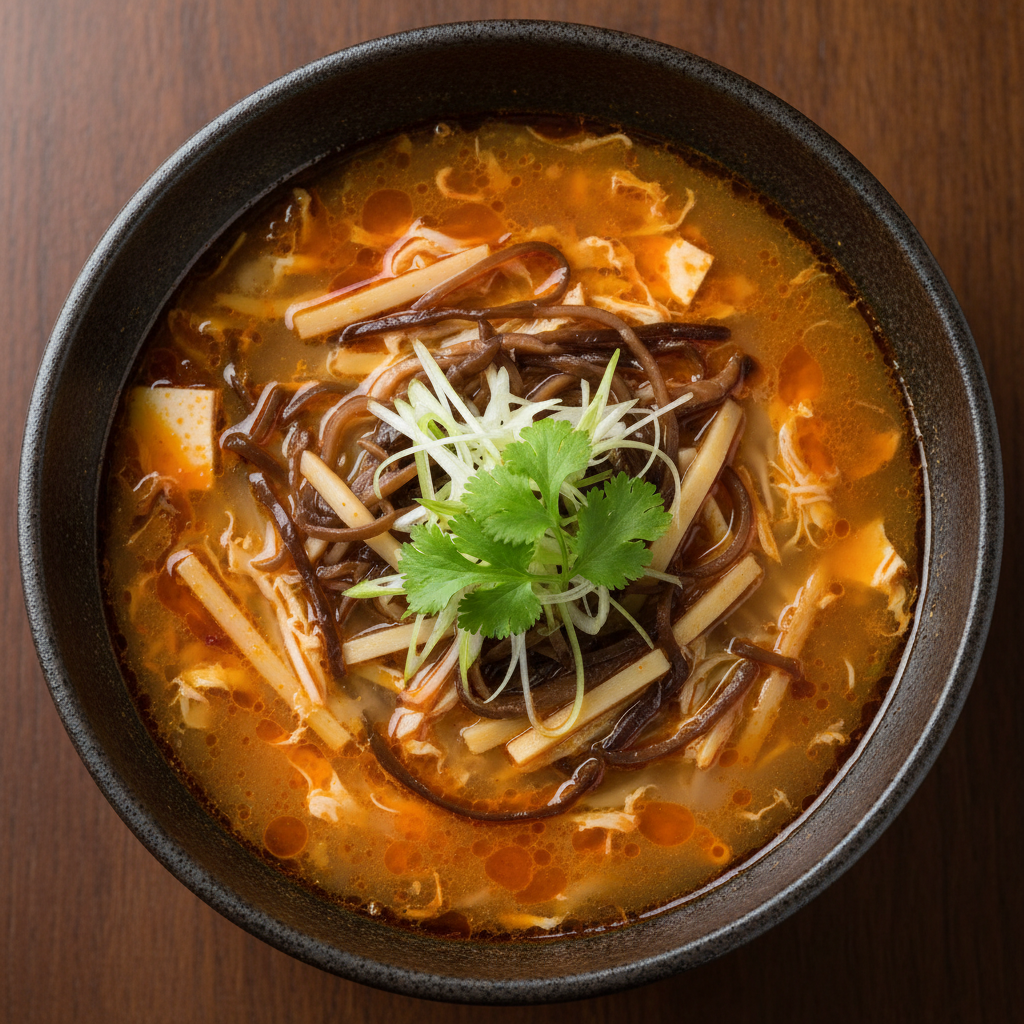
  • Hot and Sour Soup

    Hot and Sour Soup

    Step 1 (Prep Ingredients: Soak dried mushrooms in hot water for 20 minutes until softened. Squeeze dry, discard stems, and thinly slice. Slice all other ingredients into uniform thin strips (julienne) for even cooking. Have cornstarch slurry ready.

    Step 2 (Cook Protein & Mushrooms: Bring 6 cups broth to boil in large pot. Add julienned pork/chicken, sliced mushrooms, and bamboo shoots. Simmer for 5 minutes until meat is cooked through.

    Step 3 (Season Broth: Add 2 tbsp soy sauce, 1 tsp dark soy sauce (for color), 1 tsp freshly ground white pepper (critical for authentic heat), and salt to taste. Add tofu strips. Simmer for 3 minutes.

    Step 4 (Thicken Soup: Give cornstarch slurry a good stir. While soup is at a gentle boil, slowly drizzle in slurry while stirring constantly. Cook for 2-3 minutes until soup thickens to a velvety consistency that coats the back of a spoon.

    Step 5 (Add Vinegar & Egg: Turn off heat. Immediately stir in 3 tbsp rice vinegar (adding at high heat preserves sharpness). Wait 10 seconds, then slowly drizzle beaten egg in a thin stream while stirring gently in one direction – this creates silky ribbons. Let sit for 30 seconds to set.

    Step 6 (Finish: Stir in 1 tsp sesame oil. Taste and adjust seasoning; it should be boldly sour and peppery. Add extra 1/2 tsp white pepper powder if desired.

    Step 7 (Serve & Store: Ladle into bowls immediately. Garnish with chopped green onions and cilantro. Soup can be refrigerated for 3 days but will thicken when cold. Reheat gently with added broth or water to adjust consistency. Freeze without egg for up to 1 month; add fresh egg when reheating.

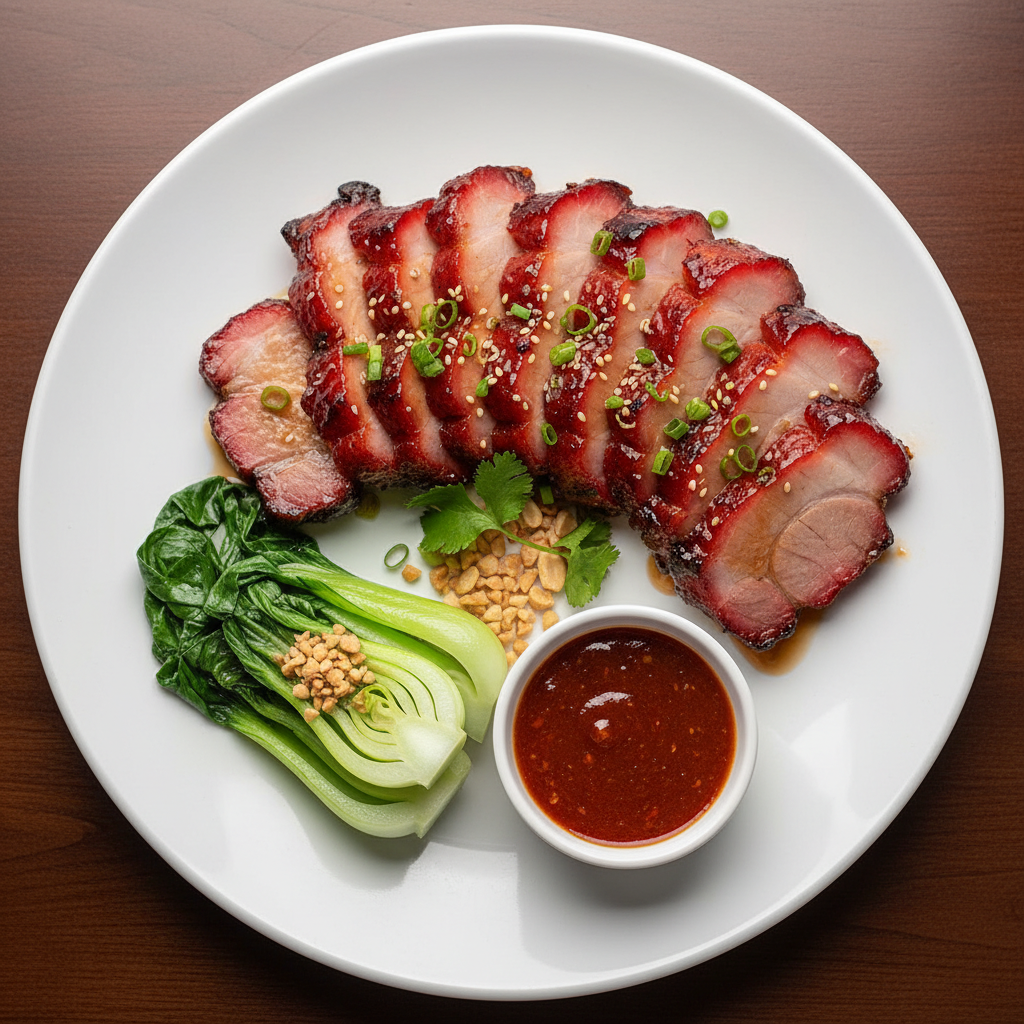
  • Char Siu (Cantonese BBQ Pork)

    Char Siu (Cantonese BBQ Pork)

    Step 1 (Prepare Pork): Trim excess fat from 800g pork, leaving 1/8-inch layer for flavor. Cut with grain into 2-inch thick, 1.5-inch wide strips. Pierce meat all over with fork (helps marinade penetrate).

    Step 2 (Make Marinade): In bowl, mash 1 cube red fermented bean curd with 1 tbsp liquid until smooth. Add 3 tbsp hoisin, 2 tbsp soy sauce, 2 tbsp Shaoxing wine, 2 tbsp honey, 2 tbsp sugar, 1/2 tsp five-spice, 3 cloves minced garlic, 1 tsp sesame oil. Whisk until sugar dissolves.

    Step 3 (Marinate): Place pork strips in zip-top bag or shallow dish. Pour marinade over, ensuring each piece is coated. Marinate in refrigerator for at least 4 hours, preferably overnight (12-24 hours), turning occasionally. Remove from fridge 30 minutes before cooking.

    Step 4 (Oven Setup): Preheat oven to 220°C (425°F). Line baking sheet with foil and place wire rack on top. Fill bottom of pan with 1/2 inch water (prevents smoking). Place pork on rack, reserving marinade.

    Step 5 (Roast): Roast pork at 220°C (425°F) for 25 minutes, turning once at 15-minute mark. Brush with reserved marinade after turning.

    Step 6 (Glaze): Reduce oven to 190°C (375°F). Mix 3 tbsp honey with 1 tbsp hot water. Brush pork generously with honey glaze. Roast additional 10-15 minutes until internal temperature reaches 68°C (155°F) for slightly pink, juicy center (critical to not overcook). Edges should be caramelized.

    Step 7 (Rest & Slice): Remove from oven. Rest for 10 minutes to allow juices to redistribute. For authentic texture, slice against grain into 1/4-inch thick pieces. Serve immediately with rice or noodles. Store leftovers in marinade liquid in airtight container in refrigerator for 4 days. Freeze up to 3 months. Reheat by steaming for 5 minutes.

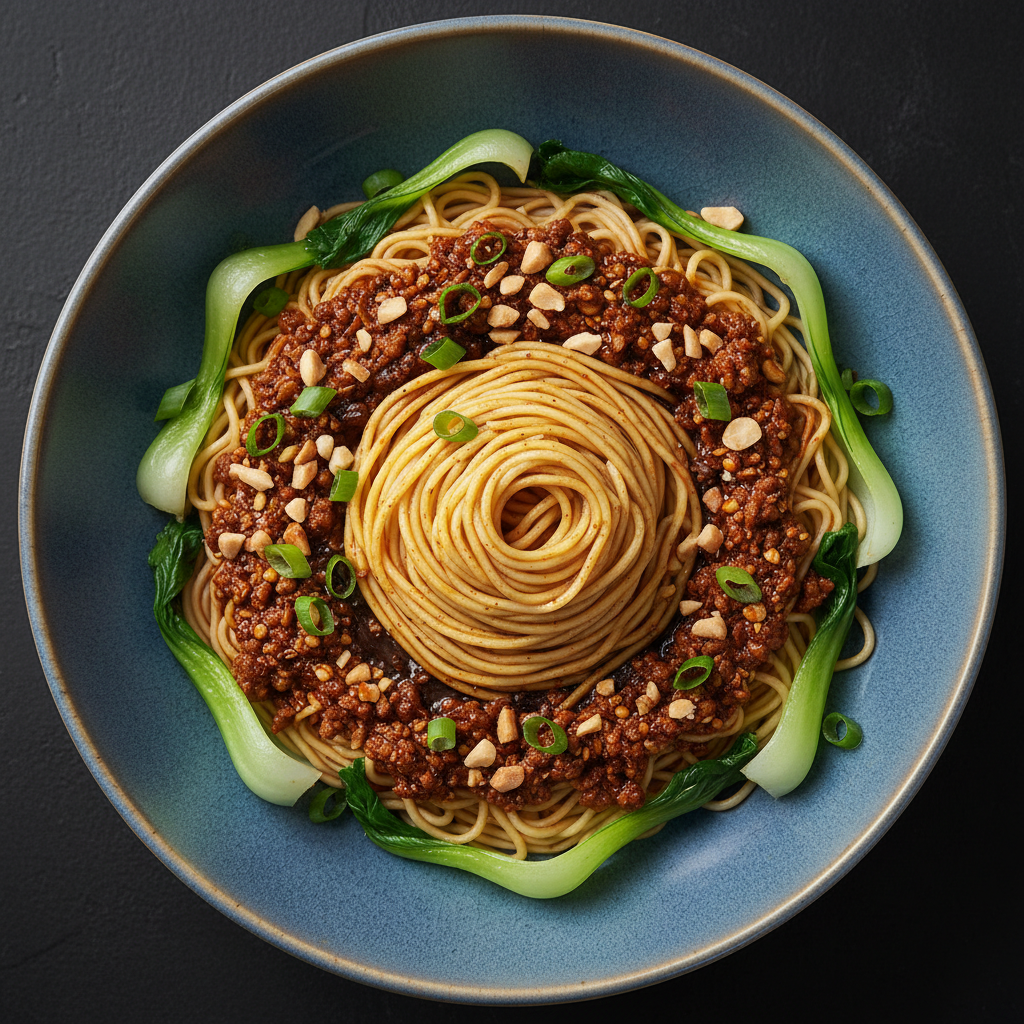
  • Dan Dan Noodles

    Dan Dan Noodles

    Step 1 (Prep Ingredients: Rinse 2 tbsp Sichuan preserved vegetable under cold water for 30 seconds to remove excess salt, then chop finely. Crush peanuts in mortar or bag. Mince garlic, ginger. Have all sauce ingredients measured.

    Step 2 (Make Meat Topping: Heat wok over medium-high. Add 1 tbsp oil. Add 150g ground pork, breaking up with spatula. Cook for 3-4 minutes until no longer pink. Push pork to side. Add minced garlic, ginger, and chopped preserved vegetable. Stir-fry for 60 seconds until fragrant. Combine with pork, add 1 tbsp soy sauce. Cook for 2 more minutes until crispy. Remove from heat.

    Step 3 (Prepare Sauce Base: For each serving bowl, combine 1 tbsp soy sauce, 1 tsp black vinegar, 2 tsp chili oil (with sediment), 1/2 tsp Sichuan peppercorn powder, 1 tbsp sesame paste, 1/2 tsp sugar. Whisk until smooth.

    Step 4 (Cook Noodles: Bring large pot of water to rolling boil. Add 200g fresh noodles. Cook according to package (usually 3-4 minutes) until al dente. Reserve 1/2 cup noodle cooking water.

    Step 5 (Assemble: To each bowl with sauce, add 3 tbsp hot noodle water and whisk to create emulsified sauce. Drain noodles and immediately divide between bowls. Toss quickly to coat.

    Step 6 (Top: Spoon pork topping over noodles. Garnish with crushed peanuts and green onions.

    Step 7 (Serve & Store: Serve immediately. Each diner should mix thoroughly before eating. Noodles are best fresh. Leftover meat topping can be refrigerated for 3 days; cook fresh noodles when ready to eat. Sauce components can be premixed and stored in refrigerator for 1 week.

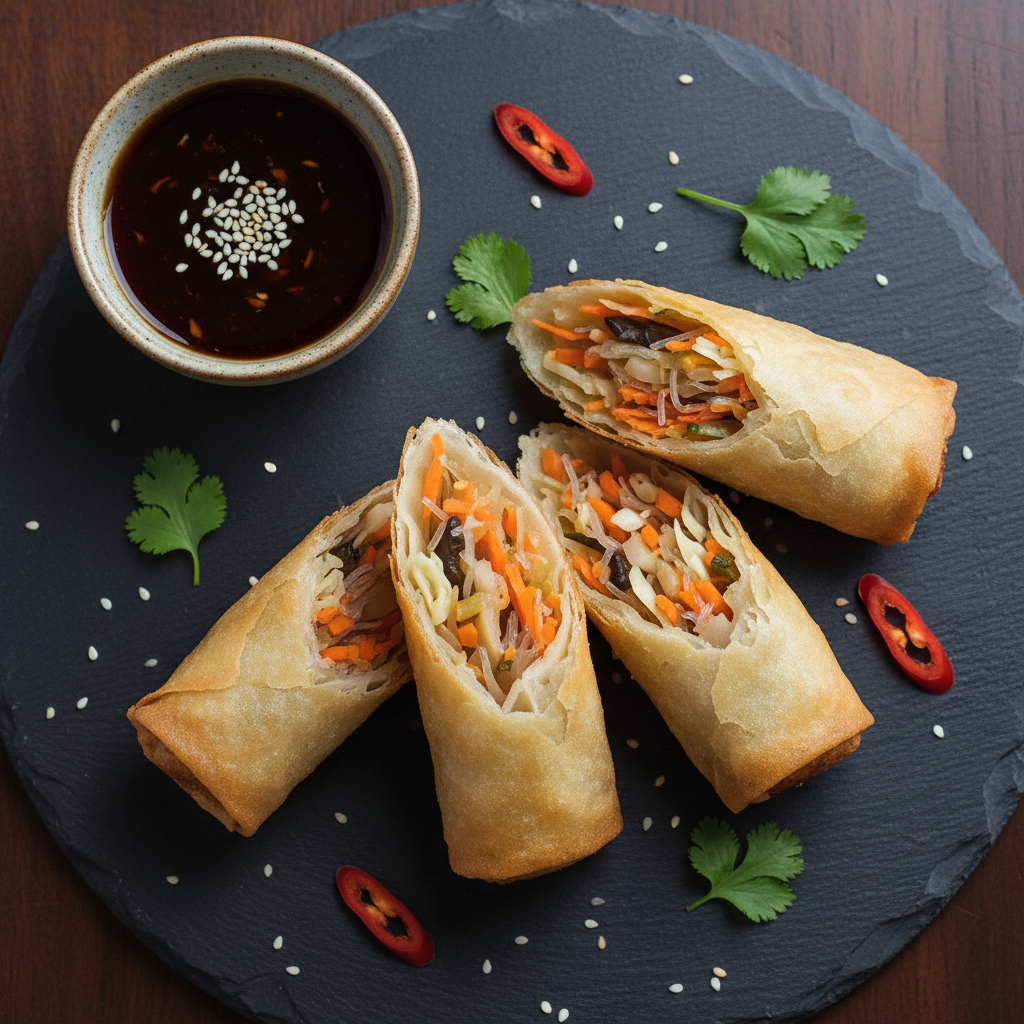
  • Spring Rolls (Vegetable)

    Spring Rolls (Vegetable)

    Step 1 (Prepare Filling: Heat wok over high. Add 1 tbsp oil. Add minced garlic and ginger, stir-fry 30 seconds until fragrant. Add carrots and mushrooms first; stir-fry for 3 minutes until softened. Add cabbage and bamboo shoots; stir-fry for 3 more minutes. Finally add bean sprouts, 2 tbsp soy sauce, 1 tsp sugar, 1/2 tsp white pepper. Cook 2 minutes until vegetables are tender but still crisp. Transfer to colander to drain excess liquid completely (critical to prevent soggy rolls). Cool to room temperature (about 20 minutes). Stir in 1 tsp sesame oil.

    Step 2 (Wrap Spring Rolls: Keep spring roll wrappers covered with damp cloth to prevent drying. Place wrapper diamond orientation. Place 2 tbsp filling near bottom corner. Fold bottom corner over filling, tuck tightly. Fold in left and right corners. Roll upward tightly. Seal top corner with cornstarch slurry. Ensure no air pockets.

    Step 3 (Fry – Two-Temperature Method: Heat 3 cups oil in wok to 160°C (320°F) – medium heat. Gently add 4-5 rolls at a time. Fry for 4-5 minutes until pale golden. Remove and drain on rack. Let rest 5 minutes. Increase oil temperature to 190°C (375°F). Refry rolls in batches for 90 seconds until deep golden brown and very crisp (double frying ensures crisp exterior without greasiness).

    Step 4 (Alternative Baking: For healthier version, brush rolls with oil. Bake at 200°C (400°F) for 20-25 minutes, flipping halfway, until golden and crisp.

    Step 5 (Drain: Place fried rolls on wire rack (not paper towels) to prevent steaming and keep crisp.

    Step 6 (Serve & Store: Serve immediately with sweet chili or plum sauce. Best consumed within 2 hours. Uncooked rolls can be frozen on baking sheet, then transferred to bag for 3 months. Fry from frozen, adding 2 extra minutes to first fry. Leftover cooked rolls lose crispness; reheat in oven at 180°C (350°F) for 8-10 minutes.