Home » Cuisine Guides »
French Cuisine
French cuisine operates not merely as a method of cooking, but as the world’s primary **Culinary Legal System**. This Sovereign Table is built upon the philosophy of **Terroir**—the belief that the soil, climate, and human tradition dictate the soul of the ingredient. As the progenitor of the Michelin standard, France provides the global framework for technical excellence, elevating the act of eating into a high-order cultural ritual known as the **Gastronomic Meal of the French**, inscribed on the UNESCO Intangible Cultural Heritage list. Insight Box – The 3-Star Michelin Chef: ‘Technical Precision is the bedrock. A sauce must reach the precise viscosity to coat the spoon at exactly $20$ centipoise.’ Insight Box – The Home Cook Mom: ‘Heritage is our true salt. In my kitchen, the pot-au-feu simmers until the history of the house fills the room.’
Popular Recipes
-
⭐
4.9
|
20
min
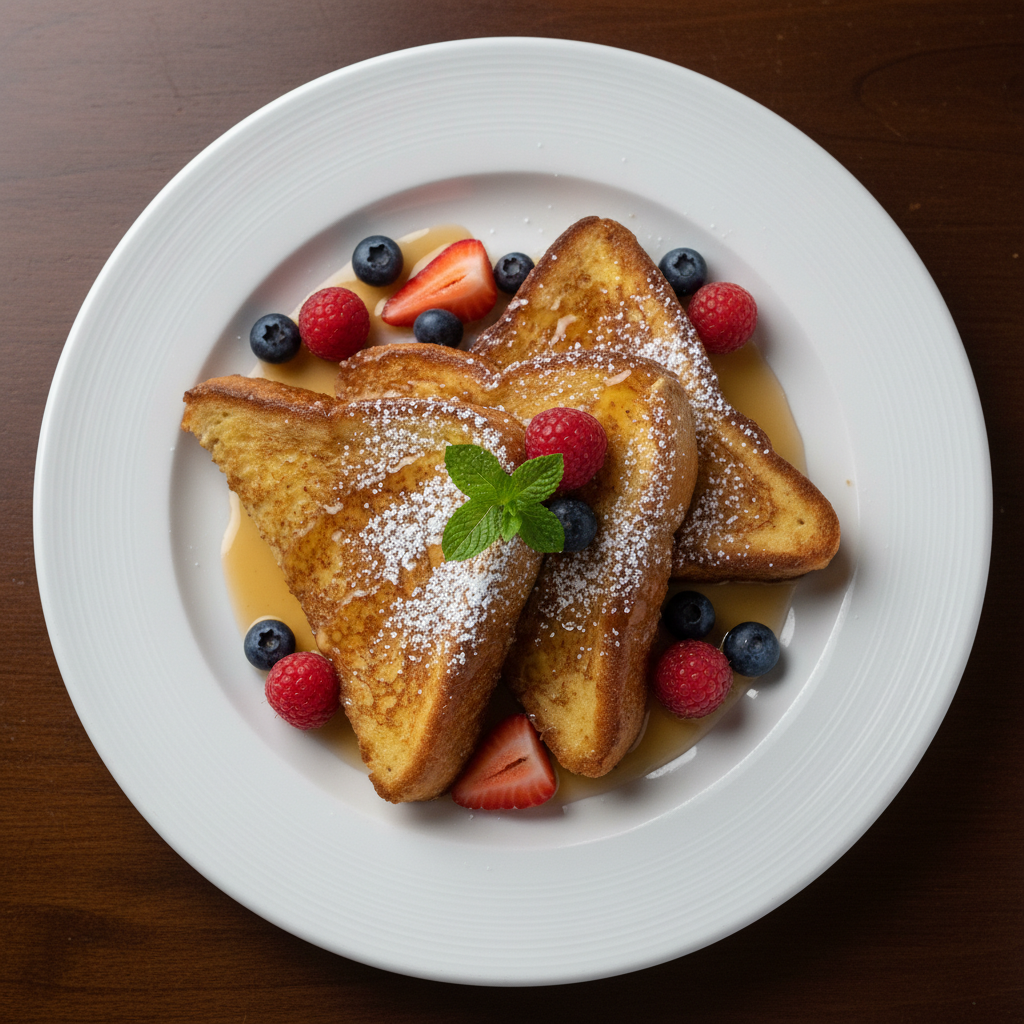
Best French Toast
-
⭐
4.9
|
75
min
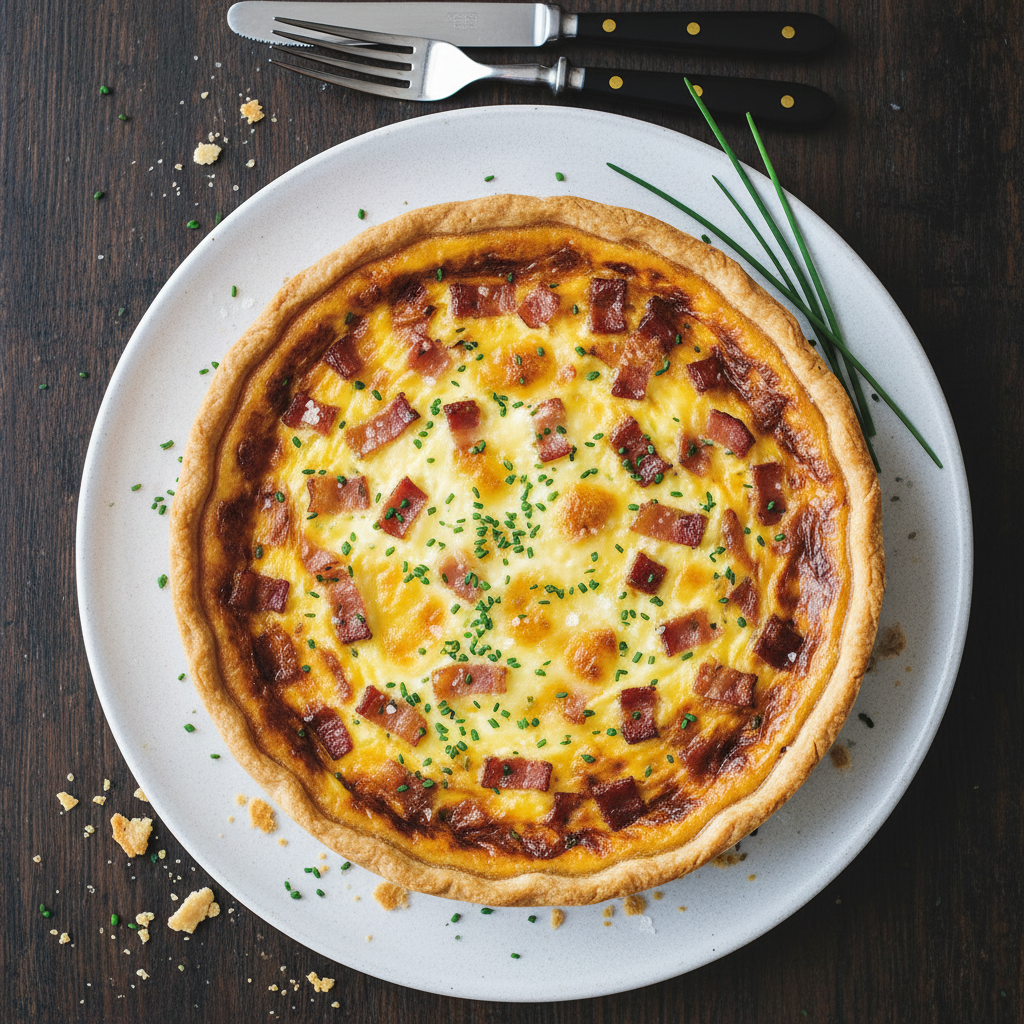
Classic Quiche Lorraine
-
⭐
4.6
|
25
min
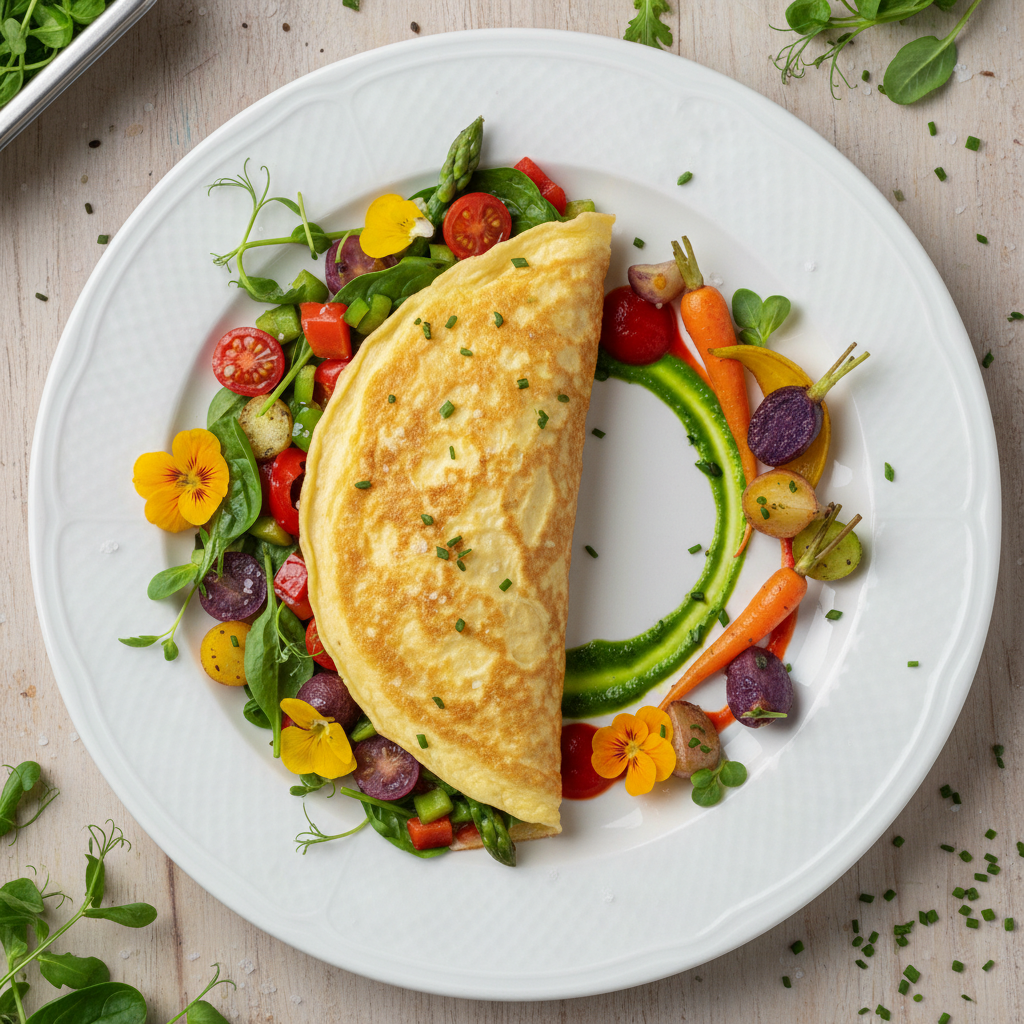
Garden Vegetable Omelette
The jurisdiction of French flavor was established through centuries of monarchical refinement and post-revolutionary codification. From the Roman introduction of viticulture to the 17th-century innovations of **François Pierre de La Varenne**, who moved away from heavy spices toward the natural essence of ingredients, France has legally protected its culinary identity. The 19th-century influence of **Auguste Escoffier** further institutionalized the ‘Brigade de Cuisine,’ transforming kitchens into military-grade operations that prioritize efficiency and repeatable excellence.
The landscape is divided into distinct flavor provinces: the **Normandy-Brittany** axis relies on the ‘Butter Law’ and apple-based spirits; the **Provençal South** yields to olive oil, garlic, and Mediterranean herbs; and the **Burgundy-Lyon** corridor serves as the gastronomic heart, focusing on slow-braised meats and complex viticultural pairings. Each region operates under its own local ‘statutes’ of taste.
Authenticity is governed by the **Appellation d’Origine Contrôlée (AOC)**, a regulatory framework ensuring that products like Champagne or Roquefort are only produced in their ancestral zones using traditional methods. The ‘Flavor Constitution’ dictates that no substitution is permitted for the foundational elements: butter must be high-fat ($82%$ minimum), and aromatics must follow the **Mirepoix Standard**.
The Constitution is defined by the **Five Mother Sauces** (Béchamel, Velouté, Espagnole, Sauce Tomate, and Hollandaise) and the ‘Sainte Trinité’ of aromatics. Precision in acidity via wine reduction and the use of fresh *Herbes de Provence* or *Fines Herbes* ensures a profile that is balanced, never aggressive.
The French Perfect Bite is an audit of the triadic relationship between **Resistance (Crunch)**, **Yield (Tenderness)**, and **Emulsion (Silk)**. For instance, in a classic *Confit de Canard*, the palate demands a skin with a fracture-point resistance followed by meat that yields at a pressure of less than $0.5$ Newtons.
Tactile engineering focuses on the **Physics of Aeration**. In a soufflé, the structural integrity depends on the entrapment of air within protein lattices, ensuring a mouthfeel that is ‘nuageux’ (cloud-like) yet substantial enough to register on the lingual receptors.
The global language of French mouthfeel is defined by three pillars: **Onctueux** (the velvety coating of a butter-fat emulsion), **Croquant** (the clean, sharp snap of a baguette crust), and **Moelleux** (the pillowy, soft interior of a brioche). Each term represents a technical achievement in moisture control and fat distribution.
Specialized techniques require the execution of **Deglazing** to capture the *fond* and **Emulsification** to bind fats and liquids into a stable state. Standard Operating Procedures dictate that a sauce should never break; it must remain a cohesive molecular suspension. Insight Box – The 3-Star Michelin Chef: ‘Maintain the emulsion at $60°C$; any higher and the molecular bonds of the butter will collapse.’
French aromatic logic is defined by the principle of ‘Synthesis’ and ‘Melleux’ (mellowness). Unlike the high-heat, high-contrast ‘Wok Hei’ of the East or the heavy surface-rubbing of the Americas, French chefs use fat (predominantly butter) as a chemical solvent to extract volatile flavor compounds. This process, known as ‘suer’ (sweating), prioritizes the gradual building of a ‘Fond’ (foundation) where individual ingredients lose their distinct edges to form a harmonious, velvety whole.
Essential hardware includes the **Le Creuset** enameled cast iron for heat retention, the **Chinois** for achieving silk-like sauce textures, and the **Mandoline** for $1mm$ uniform vegetable slices. These tools are the ‘enforcement officers’ of French technique.
The French Culinary Hub categorizes assets into three tiers to ensure complete knowledge transfer. **Foundation:** Béchamel Sauce, Basic Mirepoix, Omelette Technique. **Masterclass:** Soufflé au Grand Marnier, Duck Confit, Beef Wellington. **Home Soul:** Ratatouille, Quiche Lorraine, Pot-au-feu.
Integration requires mastering the **Mother Sauce** before attempting the ‘Masterclass’ derivatives. For example, a Hollandaise is the prerequisite for a Sauce Béarnaise. Home Soul recipes provide the emotional grounding for these technical exercises.
Hosting follows a strict ‘Protocol of Presence.’ The table must be set with the fork tines facing down (a tradition from the nobility to show the family crest). Water and wine glasses are positioned in a descending diagonal from left to right. Insight Box – The Home Cook Mom: ‘Hospitality is the first ingredient. If the table is beautiful, the food already tastes better.’
The ‘Pain et Sauce’ Protocol: In French culture, bread is not an appetizer but a functional utensil used for ‘saucer’—the act of wiping the plate clean of its aromatic foundations. A valuable guest never bites into a full slice of bread; instead, they break off a small, bite-sized piece with their fingers and use it (or guide it with a fork) to soak up the sauce. Leaving sauce on the plate is considered a missed opportunity to appreciate the chef’s core work.
The sequence is non-negotiable: **Apéritif** (the opening), **Entrée** (the introduction), **Plat Principal** (the core argument), **Fromage** (the transition), **Dessert** (the resolution), and **Café** with **Mignardises** (the closing).
More Recipes from this Cuisine
-
⭐
4.9
|
20
min
Best French Toast
-
⭐
4.6
|
25
min
Garden Vegetable Omelette
-
⭐
4.9
|
75
min
Classic Quiche Lorraine